If you've spent more than ten minutes looking for riding gloves india online, you already know the problem. There are too many options, not enough honest answers, and every product page says the same things. This guide cuts through that.
The two materials you'll keep coming back to are leather and textile. Both work. Both have real trade-offs. Which one makes sense for you depends on how you ride, where you ride, and what your riding conditions actually demand.
What Leather Gloves Actually Offer
Leather has been used in riding gear for decades, and not because of tradition. The abrasion resistance is genuinely good. In a slide, leather holds up better than most synthetic materials. It also molds to your hand over time, which means a leather glove that fits okay on day one will fit noticeably better after a few weeks of regular use.
The palm grip is another thing riders notice. On wet or sweaty hands, leather keeps its texture better than many textile options. If you're spending long hours on a highway, that matters.
Where leather falls short is ventilation. A full leather glove in peak Indian summer is uncomfortable. You'll sweat, your grip may suffer, and after a few months, the inside starts to smell if you don't maintain it. Leather also needs conditioning, and leaving it dry for too long causes cracking.
Leather gloves also tend to run stiffer in cold weather. Not unusable, but noticeable. If you ride early mornings in winter, give them a few minutes to warm up before you expect full dexterity.
If you do highway touring in moderate weather and want reliable grip and abrasion resistance, leather is the right call.
What Textile Riding Gloves Offer
Textile covers a wider range of materials: Cordura, mesh, synthetic leather, and microfiber blends. The construction varies a lot by brand and design, but as a category, this type of glove does a few things better than leather.
Ventilation is the obvious one. A mesh option in summer is a completely different experience from a leather glove. Your hands stay cooler, you sweat less, and it dries quickly if it does get wet. For city commuting in hot weather, this is hard to argue against.
Textile gloves are also easier to maintain. Most can be machine washed, or at least rinsed under a tap. They're ready to use again the same day. No conditioning, no drying time.
Where textile gloves lose ground is in abrasion resistance. That said, options with Cordura panels and reinforced palms can close the gap significantly, depending on how they are constructed.
Dexterity tends to be better in this type, especially on touchscreen buttons or when you need to do something quickly without removing the glove.
For city commuting in hot weather, regular maintenance you'd rather skip, or riding through monsoon season, textile is the more practical choice.
Direct Comparison: Where Each Material Wins
Here's how leather and textile stack up side by side across the factors that matter most for Indian riding conditions:
|
Feature |
Leather |
Textile |
Notes |
|
Abrasion Resistance |
★★★★★ |
★★★☆☆ |
Textile with Cordura panels can close the gap, depending on construction |
|
Ventilation |
★★☆☆☆ |
★★★★★ |
Perforated leather helps, but mesh textile still wins in high heat |
|
Weather Sealing |
★★☆☆☆ |
★★★★☆ |
More textile options ship with waterproof membranes (Gore-Tex) |
|
Durability Over Time |
★★★★★ |
★★★☆☆ |
Leather lasts longer when conditioned; textile wears at palms and tips |
|
Ease of Care |
★★☆☆☆ |
★★★★★ |
Textile can be washed; leather needs conditioning and proper storage |
|
Fit Over Time |
★★★★★ |
★★★☆☆ |
Leather molds to your hand; textile keeps its original shape |
|
Initial Dexterity |
★★★☆☆ |
★★★★★ |
Leather needs a break-in period; textile is flexible from day one |
|
Best Weather |
Cool or Dry |
Hot or Wet |
Leather for winters and highways; textile for summers and city |
What Indian Riding Conditions Actually Demand
Riding in India is not the same as riding in Europe. The temperature range alone is wide: 10°C December mornings and 42°C May afternoons. City traffic means constant clutch and brake work. Highway stretches mean long hours in one position.
For most Indian riders, a single pair rarely covers everything. That's why a lot of experienced riders own both. A good pair of summer textile gloves handles the majority of commuting months. A leather pair comes out for longer rides, cooler months, or when you want better grip and protection.
If you're buying your first pair of riding gloves and want to keep it to one option, go textile if you're in a hot city. Go leather if you're doing regular highway runs in moderate weather.
A Word on Fit and Knuckle Protection
Material choice matters less than fit. A leather glove that doesn't fit well is worse than a textile option that does. When trying them on, make sure the fingers don't bunch at the tips, the wrist closure is snug without restricting blood flow, and the palm padding sits over the right areas.
Knuckle protection is a non-negotiable feature regardless of which material you choose. Hard-shell or D3O inserts at the knuckles add crash protection that neither leather nor textile provides on its own. When checking a pair, look for this specifically. It is the single feature most riders overlook until it is too late.
Where to Find the Right Pair for Indian Roads
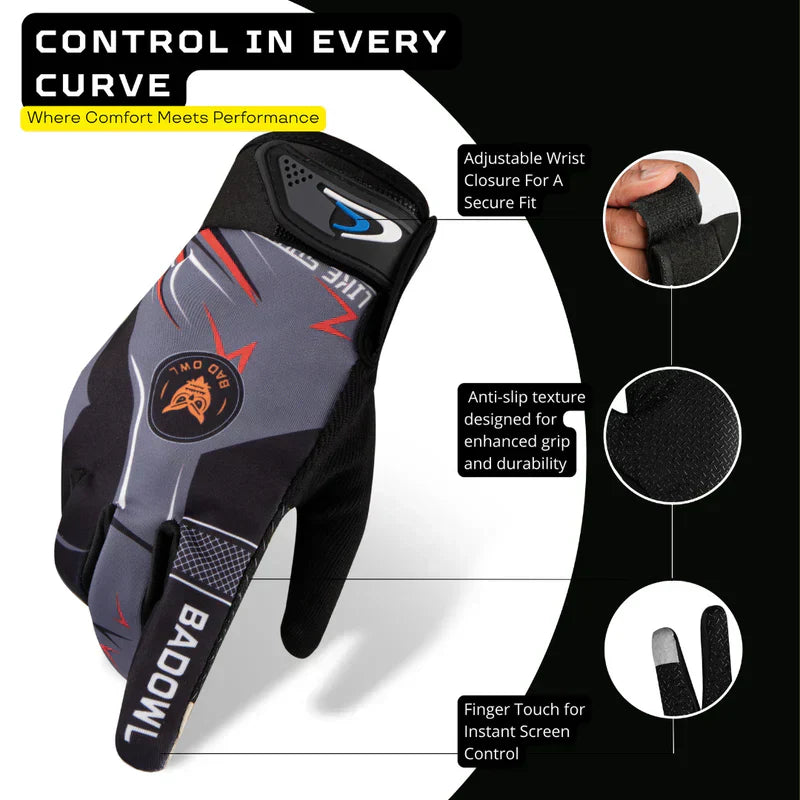
If you're looking for a pair that holds up to Indian roads and weather, Bad Owl (badowl.in) has a solid range for riders across both leather and textile categories. The gloves are sourced with commuting and touring conditions in mind, which means you're not getting generic gear rebranded for the Indian market.
Whether you're picking up your first pair for summer or looking for a new option for longer rides, it's worth browsing the collection at badowl.in. The range is competitively priced and the fit options cover most hand sizes.
Browse the full collection at badowl.in/collections/riding-glove
FAQs
Which riding gloves are better for Indian summers, leather or textile?
Textile, specifically mesh textile. Leather traps heat and becomes uncomfortable in high temperatures. A well-constructed mesh option keeps airflow going and dries fast if your hands sweat.
Are leather options safer than textile ones?
In terms of abrasion resistance, leather generally performs better due to its material properties. Textile options with Cordura reinforcement can close the gap, depending on construction. Safety also depends on knuckle protection and fit, not just the outer material.
How long do leather options last?
With regular conditioning and proper storage, a well-maintained pair can last 3 to 5 years. Leaving them dry or exposed to direct sunlight speeds up cracking and wear.
Can I use motorcycle riding gloves for cycling or other sports?
The fit and padding are designed for handlebars and controls, so they work reasonably well for cycling. That said, dedicated cycling gloves are lighter and better ventilated for that specific use. For motorcycles, stick to motorcycle-rated gloves.
What should I look for when buying riding gloves online?
Check for knuckle protection (hard shell or D3O), palm padding, wrist closure type, and whether the sizing runs true. Read reviews from buyers in similar climates to yours. If the product page says nothing about the material breakdown or protection features, be cautious.
How do I clean leather ones?
Wipe them down with a damp cloth after rides. Every few weeks, apply a leather conditioner to keep the material from drying out. Avoid machine washing or soaking in water.
Are textile gloves waterproof?
Some are, with built-in waterproof membranes. Most basic mesh options are not. If you ride in the rain regularly, look specifically for waterproof textile options or carry a separate pair of rain liners.
Nobody wins this debate cleanly. Leather earns its place on long highway runs in cooler weather. Textile makes city commuting in summer bearable. Match your choice to where you actually ride most, not to what looks good on paper. And if you ride enough to justify owning both, the combination covers more ground than either one alone.