Most cyclists buy their first pair of bike riding gloves india based on how they look. That's fine. But once you've done a two-hour ride on Indian roads with the wrong pair, you'll have a much clearer opinion.
The question of padded versus non-padded cycling gloves sounds simple until you are 90 minutes in, your palms are burning, and your grip has gone soft. This guide covers what actually matters when picking riding gloves for longer rides, so you don't have to figure it out the hard way.
What Is the Actual Difference Between Padded and Non-Padded Cycling Gloves
Padded gloves have foam or gel inserts built into the palm area. The padding sits between your hand and the handlebar to absorb road vibration and distribute weight more evenly across your palm. On smooth roads at low speeds the difference is subtle. On Indian roads with potholes, uneven tarmac, and constant braking, the difference is something your hands will remember the next morning.
Non-padded options are thinner, lighter, and generally better ventilated. They give you more direct feedback from the handlebar. Some riders prefer this. For short city rides under 30 minutes, non-padded cycling gloves are a perfectly reasonable choice. For rides over an hour, especially on rough surfaces, the argument shifts toward padding.
|
Feature |
Padded Gloves |
Non-Padded Gloves |
|
Palm cushioning |
Yes (foam or gel inserts) |
None |
|
Vibration absorption |
Good to excellent |
Minimal |
|
Hand fatigue (over 1hr) |
Noticeably lower |
Builds faster |
|
Breathability |
Moderate |
Better airflow |
|
Grip on wet surface |
Silicone palm grip zones |
Depends on material |
|
Weight |
Slightly heavier |
Lighter |
|
Best for |
Long rides, rough roads |
Short rides, hot weather |
|
Nerve pressure relief |
Yes |
No |
The Real Problem with Long Rides: Ulnar Nerve Compression
Ulnar nerve compression is the technical name for what most cyclists call numb hands or tingling fingers. It comes from sustained pressure on the ulnar nerve, which runs through the palm, caused by handlebar weight and road vibration over time.
Most riders don't feel it in the first 30 minutes. After 90 minutes on a rough road it gets noticeable. After three hours it can get bad enough to affect braking response and gear shifts.
Padded gloves with gel inserts positioned correctly can meaningfully reduce this. Non-padded cycling gloves offer no relief from ulnar nerve compression. If you ride long distances regularly, that single fact is usually enough to settle the debate.
What to Look for Inside a Padded Cycling Glove
Not all padding is the same, and buying based on the description alone rarely tells you much. Here is what the inside of a well-constructed padded pair should actually have:
• Gel padding in the palm: Absorbs vibration and shock better than foam. Stays effective longer under sustained weight. The best position is across the ulnar nerve area on the outer palm.
• Foam padding: Less effective than gel over long distances but sufficient for rides under 90 minutes. It compresses faster with repeated use.
• Silicone grip zones: Raised silicone patterns on the palm improve handlebar grip in dry and wet conditions. More relevant in rain or if your hands sweat.
• Pre-curved fingers: The glove is shaped to mirror a natural hand position on handlebars. Reduces bunching and lets you brake and shift without adjusting your grip.
• Breathable mesh back panel: Keeps airflow going. Without this, padded gloves trap heat and sweat quickly, especially in Indian summers.
• Adjustable wrist closure: Velcro or elastic wrist strap keeps the glove from shifting when you change hand position on long rides.
Which One Should You Use: Ride Length and Terrain Guide
The right choice between padded and non-padded cycling gloves largely depends on how far you ride and what the road is like. Here is a straightforward breakdown:
|
Ride Duration |
Terrain |
Recommended Type |
Why |
|
Under 30 min |
City roads |
Non-padded |
Short enough that fatigue is not a factor |
|
30 to 60 min |
Mixed |
Either works |
Padded gloves help if roads are rough |
|
1 to 2 hours |
Highway or bumpy |
Padded |
Vibration builds up; palm pressure becomes real |
|
2 hours plus |
Any |
Padded |
Non-padded on long rides causes ulnar nerve issues |
|
All-day touring |
Highway |
Padded with wrist closure |
Full protection and fatigue management needed |
If you do weekend long rides but mostly short daily commutes, having both types is the practical solution. A lightweight non-padded pair for weekdays, padded for anything over an hour.
When Padded Gloves Are Actually the Wrong Choice
Padded cycling gloves are not the right call in every situation. Here are a few where the non-padded option makes more sense:
• Peak summer commuting: A padded glove with minimal ventilation in 42 degrees heat is genuinely uncomfortable. Your hands sweat, the padding gets damp, grip degrades. A lightweight mesh option handles this better.
• Very short rides: For anything under 20 minutes on smooth city roads, the padding does nothing meaningful. You are just carrying extra weight.
• Touch sensitivity tasks: Some riders prefer non-padded gloves when they need to frequently operate phone mounts, GPS units, or switches. Thinner gloves give better tactile feedback.
Half-Finger vs Full-Finger Bike Riding Gloves
This question comes up alongside the padded vs non-padded debate. Here is how they differ:
Half-finger (fingerless) gloves
• Better ventilation, hands stay cooler on hot days
• More dexterity for touchscreen use and gear adjustments
• Fingers exposed in a fall, which means abrasion risk on knuckles and fingertips
• Fine for recreational road cycling and short rides where protection is less critical
Full-finger gloves
• Complete hand coverage including fingers
• Better protection for off-road, gravel, and motorbiking
• Warmer in cooler weather, which is a real consideration on early morning rides
• Recommended for Indian road conditions where unexpected debris and rough patches are common
For most Indian riders, full-finger options cover more situations without a significant trade-off. The protection advantage on Indian roads outweighs the slight heat difference in most riding months.
Bike Riding Gloves Worth Looking At: Bad Owl
If you are looking for a pair built for Indian roads and weather, Bad Owl (badowl.in) has two options worth checking before you decide.
Street Hawk Gloves for Riders
A full-finger pair designed for both city commuting and longer rides. The non-slip palm keeps your grip stable in traffic and on rough terrain. Breathable fabric construction and an adjustable wrist closure that does not shift mid-ride. Available in multiple options. Competitively priced for what it offers.
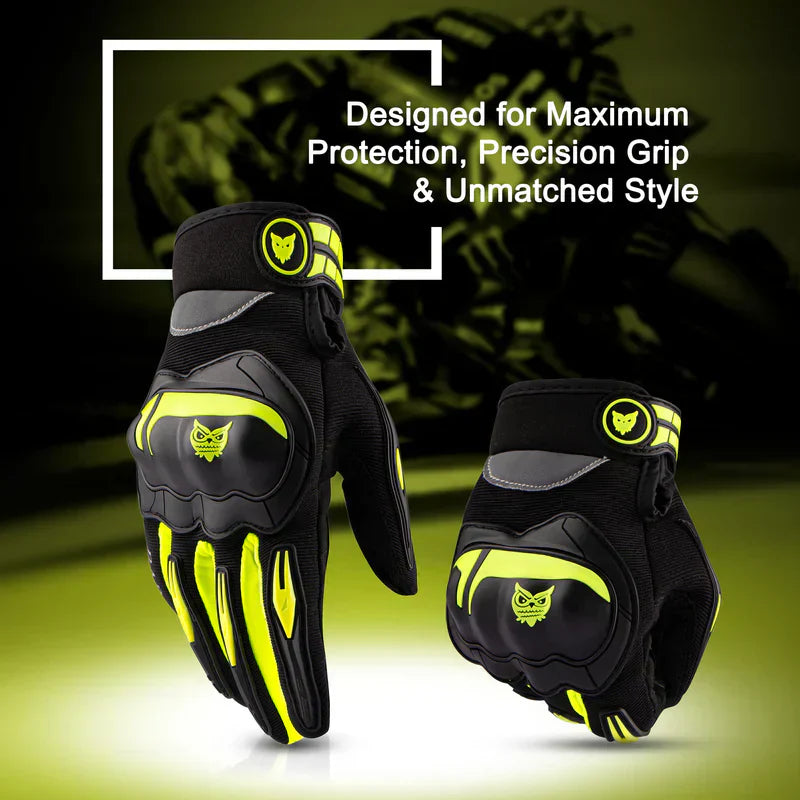
Wind Rider Full Finger Motorcycle Riding Gloves
A lightweight full-finger option that works across cycling, running, hiking, and motorbiking. Good for riders who use one pair across different activities. Available in multiple options.
Browse both at badowl.in
FAQs
Do I need padded gloves for cycling?
Not for every ride. For short commutes under 30 minutes on smooth roads, non-padded gloves are fine. For anything over an hour, especially on rough roads, padded cycling gloves reduce hand fatigue and protect the ulnar nerve from sustained pressure.
Are non-padded cycling gloves okay for long rides?
Most riders find non-padded cycling gloves increasingly uncomfortable past the 60-minute mark. They work well for short rides or hot weather where ventilation matters more than cushioning. For dedicated long rides, padded is the better call.
What makes bike riding gloves different from regular gloves?
These are built specifically for handlebar use. They have palm padding to absorb vibration, silicone grip zones, pre-curved fingers to match handlebar grip position, and ventilation on the back. Regular gloves do none of these things and provide no meaningful protection in a fall.
How do I pick the right size?
Measure your palm width at the widest point, excluding the thumb. Gloves that are too loose shift mid-ride and create pressure points. Too tight and they restrict circulation on long rides. Check the size guide before ordering and read reviews from buyers in similar climates to yours.
Do padded gloves actually help with numb hands?
Yes, specifically padded cycling gloves with gel inserts positioned in the ulnar zone. Numb hands in cycling come from sustained pressure on the ulnar nerve, which runs through the outer palm. Gel padding redistributes that pressure. If you experience frequent hand numbness on long rides, switching to a padded pair is the most direct fix before adjusting handlebar height or reach.
How long do bike riding gloves last?
With regular use, a pair typically lasts 12 to 24 months before the padding compresses and loses effectiveness. The external material usually wears at the palm first. If your gloves feel noticeably thinner in the palm than when you bought them, they are due for replacement.
Can I use motorcycle gloves for cycling?
You can, but they are not built for it. Motorcycle riding gloves are heavier and designed for impact protection, not vibration absorption over extended low-speed riding. They also run warmer, which is an issue for cycling in Indian summers. Cycling-specific gloves are the more practical choice for cycling use.
The padded vs non-padded question comes down to how you actually ride. For casual short trips, it does not matter much. For anyone doing an hour or more on Indian roads, padded bike riding gloves are not a luxury. Your hands will tell you that the first time you skip them on a long ride.