UV Protection
Arm Sleeves:
The Complete Buyer's Guide
UPF ratings explained, fabric types compared, and exactly what to look for — written for Indian weather conditions and daily riders.
UV protection arm sleeves are one of the most underrated pieces of outdoor gear in India. This guide covers everything — how UPF ratings actually work, which fabrics perform best in Indian heat, who genuinely needs them, and what to look for before buying.
What are UV protection arm sleeves?
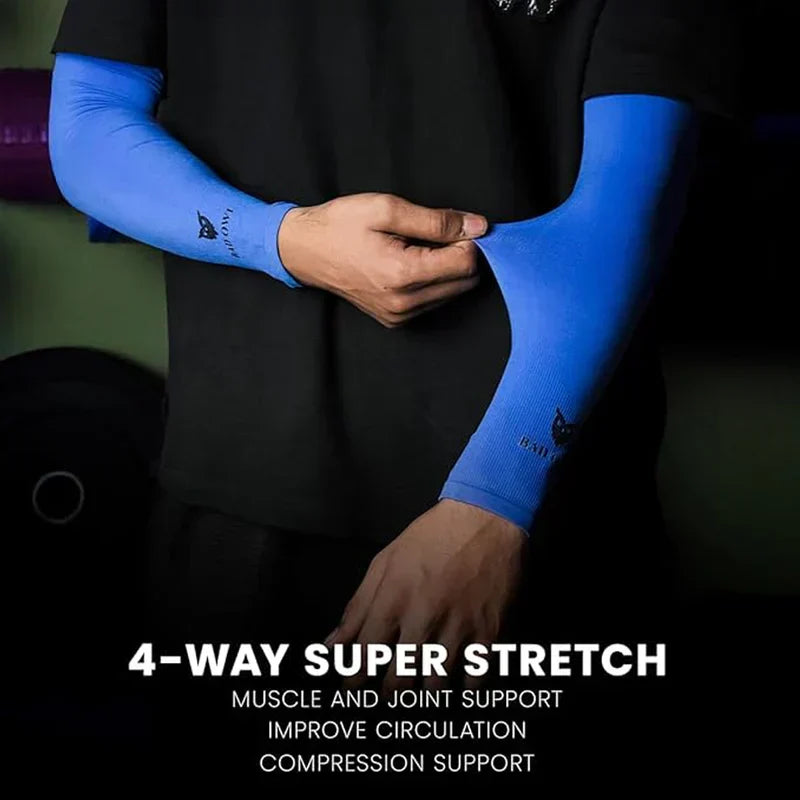
UV protection arm sleeves are stretchable fabric tubes worn over the forearms and upper arms to block ultraviolet radiation from the sun. Unlike sunscreen, they don't need reapplication, don't wash off with sweat, and don't feel greasy. A well-made pair functions as a physical UV barrier — one that stays effective for the full duration of your ride, commute, or outdoor shift.
They are not the same as compression sleeves or cycling warmers. UV sleeves are built specifically around UPF-rated fabrics, breathability, and moisture management in hot conditions — not warmth or muscle compression.
UV arm sleeves block radiation through the weave and composition of the fabric itself — not through any coating or chemical treatment. This is why a higher thread count, tighter weave, or synthetic blends typically offer better UPF than a loose cotton sleeve ever could.
UPF ratings explained — what the numbers actually mean
UPF stands for Ultraviolet Protection Factor. It measures how much UV radiation a fabric allows through to your skin. Think of it as SPF for clothing — but more reliable, because the fabric doesn't wear off.
For Indian conditions — particularly between March and October when UV Index regularly exceeds 10 — UPF 50+ is the only rating worth considering. A UV Index above 8 is classified as "very high" by the World Health Organization, and UV Index 11+ (common in Indian plains during summer) is classified as "extreme." At these levels, unprotected skin can burn in under 15 minutes.
UPF ratings assume the fabric is dry and not stretched beyond its design range. Wet fabric or excessive stretching can reduce effective protection. Look for sleeves specifically tested for stretched-state UPF performance if you sweat heavily.
Fabric types compared — what's actually inside
Not all UV arm sleeves are made the same. The outer material determines how well they perform in heat, how long they last, and how comfortable they feel after two hours on a highway. Here are the four main fabric types you'll encounter:
The most widely used fabric for UV sleeves. Lightweight, quick-drying, and holds UPF 50+ well even when stretched. Excellent for daily commuting. Can feel synthetic against skin in extreme heat — look for brushed inner surfaces.
Higher stretch recovery than polyester. Stays snug without constricting. More breathable in humid conditions. Generally more expensive but offers a noticeably better fit for riders who move their arms continuously.
Softer against skin, naturally moisture-wicking, and odour-resistant. Popular with long-distance cyclists and runners. UPF rating can degrade faster than pure synthetic options. Ideal if skin sensitivity is a concern.
Comfortable but provides very low UV protection — typically UPF 5–10 when dry, dropping further when wet. Cotton absorbs sweat rather than wicking it, making arms feel heavier over time. Not suitable as a primary UV barrier.
UV arm sleeves vs sunscreen — which is better?
UV Arm Sleeves
- ✓ No reapplication needed
- ✓ Stays effective when sweating
- ✓ Covers 100% of arm surface consistently
- ✓ Also blocks dust and wind
- ✓ Cost effective over time
- – Doesn't cover hands or neck
- – Requires washing after use
Sunscreen
- ✓ Covers any skin area
- ✓ Works on face, hands, and neck
- ✓ Invisible protection
- – Needs reapplication every 2 hours
- – Washes off with sweat
- – Greasy residue on handlebars and gear
- – Ongoing cost adds up
The honest answer: they're not competing products — they're complementary. UV arm sleeves handle your arms completely and reliably. Sunscreen fills in everything else — face, neck, hands, and any exposed skin the sleeve doesn't cover. Most serious outdoor riders use both.
Who should use UV protection arm sleeves?
How to choose the right UV arm sleeves — buying checklist
The market is full of options with vague claims and no specifications. Here's exactly what to verify before purchasing:
What to check before buying
BADOWL UV Protection Arm Sleeves — built for Indian conditions
Most UV arm sleeves on the market are designed for temperate climates — mild summers, low humidity, short outdoor exposure windows. Indian conditions demand something different: extreme heat, high humidity, dusty roads, and daily use across months of sustained UV intensity.
BADOWL's arm sleeves are designed with these conditions in mind. The fabric is high-stretch and UPF 50+ rated, with a quick-dry construction that handles sweaty rides without leaving you with damp sleeves two hours in. The fit stays snug through the full range of arm movement, and the design is low-profile enough to work with any gear or outfit.
Multiple colour options are available — from subdued neutrals that pair with riding gear to brighter options for runners and cyclists. The fabric holds its colour and rating through repeated washing, which matters if you're wearing them every day.
Frequently asked questions
Detailed answers to the questions buyers actually ask before purchasing UV arm sleeves.
What does UPF 50+ actually mean in practice?
Are UV arm sleeves better than sunscreen for riding?
Can UV arm sleeves actually keep you cooler than bare skin?
How do I find the right size UV arm sleeve?
How long do UV arm sleeves last? When should I replace them?
Can I use UV arm sleeves for cycling, not just motorcycles?
How should I wash UV protection arm sleeves?
Do UV arm sleeves protect against both UVA and UVB rays?
Ready to ride with real protection?
BADOWL's UV protection arm sleeves are built specifically for Indian conditions — high heat, daily use, and the kind of sweaty rides that send most sunscreen straight down your arms.
Shop UV Arm Sleeves at BADOWL →